
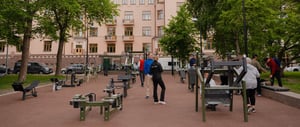
Tips for accessible outdoor exercise
An outdoor gym should be a place for everyone, regardless of age, physical ability, or fitness level. With thoughtful planning and the right conditions, it’s possible to create an inclusive workout environment where more people feel welcome and can exercise on their own terms.
Accessibility is about more than just physical accessibility. People should be able to find their way to the outdoor gym, understand how it works, and use the equipment based on their own abilities. That’s why it’s important to incorporate accessibility as a natural part of the planning process from the very beginning.
Clarity creates a sense of security; a well-thought-out placement of equipment, good contrast, clear instructions, and a logical layout of the workout area can make a big difference for many different user groups.
Below, we’ve compiled seven tips on what to consider when creating a more accessible and inclusive outdoor gym.
1. Location and how to find the outdoor gym
-
Place the gym so that it’s easily visible from nearby walkways and entrances.
-
Use clear signage with good contrast, legible text, and easy-to-understand symbols.
-
Arrange the equipment in a logical layout so that the exercise will have a practical structure and changing from equipment to another is easy.
-
Take into account how people with visual impairments can navigate the space, for example, by providing clear guide paths and consistently placing the equipment.
2. Ease of access: Getting around easily
-
Choose a firm, even, and slip-resistant surface that works well with various types of assistive devices.
-
Keep the path free of obstacles such as loose objects and protruding parts that may be difficult to detect with a cane.
-
Consider how rain, leaves, snow, and ice affect both accessibility and safety.
3. Layout and placement: Easy to navigate in the area
-
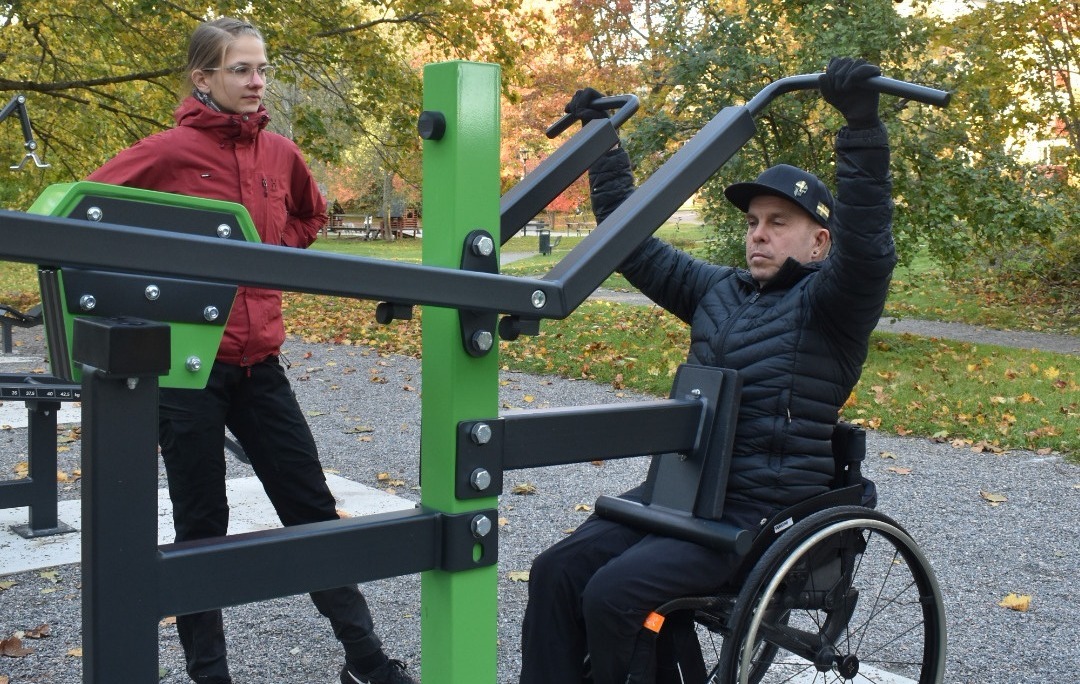
Arrange the equipment in an easy-to-understand way, with clear pathways between them.
-
Use contrasts between the equipment, the ground, and the surroundings to make it easier for people with visual impairments.
4. Varied and accessible exercise equipment
-
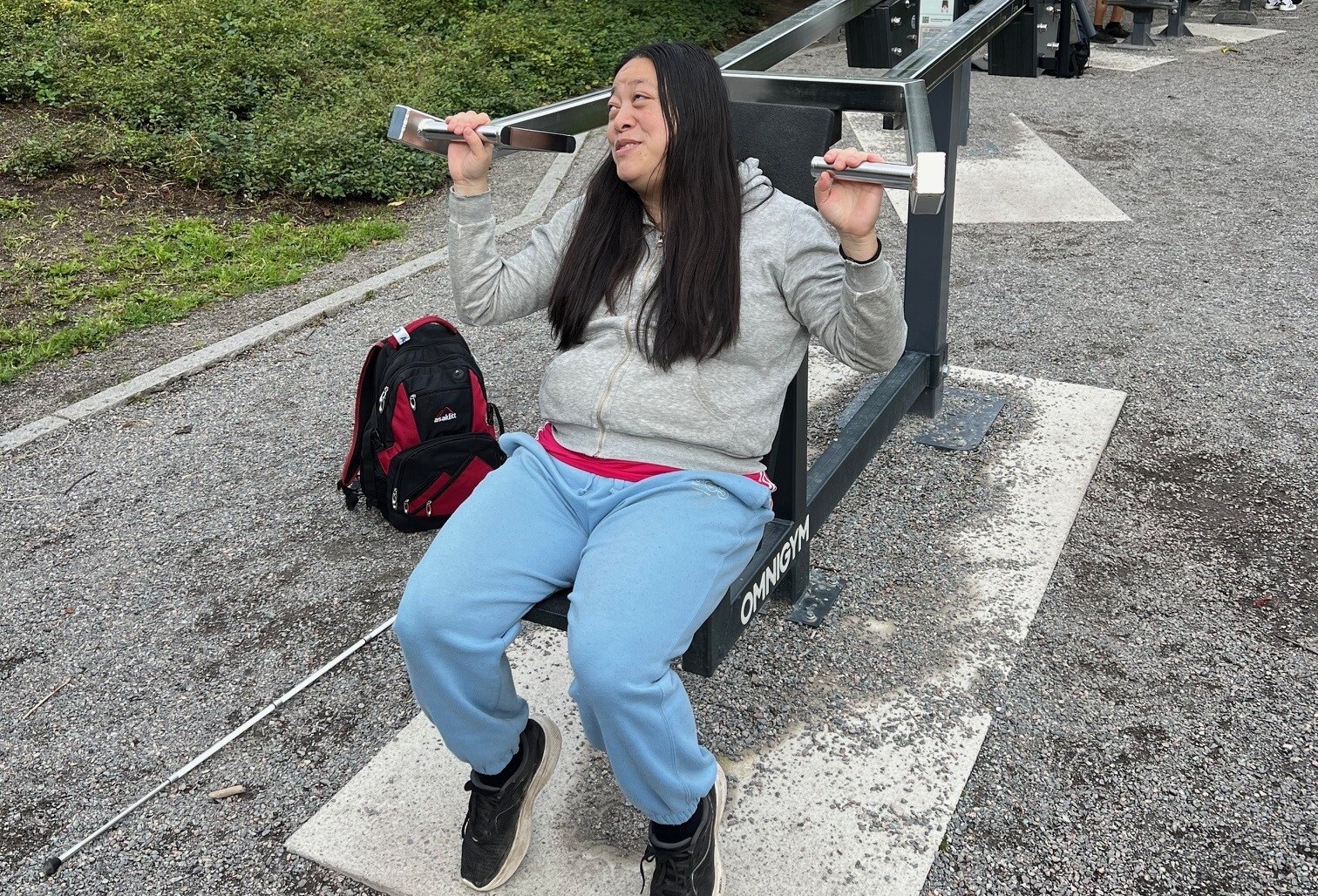
Easy weight adjustment: choose equipment where resistance and weights can be adjusted easily. This makes it easier for people with different levels of strength and fitness to use the same equipment based on their own abilities.
-
Note the design of handles and grips: ergonomic handles with well-thought-out size and shape make the equipment easier to use for more people, including those with reduced hand strength or limited hand function.
-
Start with the target audience: e.g. for seniors, an incline bench press may be preferable so they don’t have to lie down for a flat bench press. Similarly, a seated leg press is often more accessible than, for example, a standing squat, and so on.
-
A wide range of exercise equipment: feel free to offer several types of different equipment so that more people can find exercises that suit them specifically.
Check out more tips on what’s important to keep in mind for safe and effective outdoor workouts.
5. Clear instructions to simplify the workout
-
Use short, clear instructions written in simple language.
-
Combine text with educational illustrations that show how to perform the exercise.
-
Feel free to supplement with audio-based information or videos with narration and subtitles.
6. Safety and opportunities for recovery during exercise
-
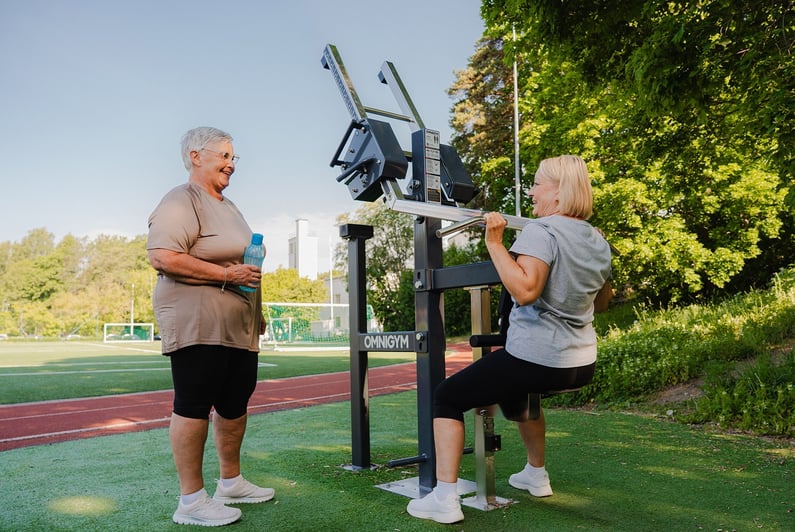
Place benches and rest areas near the exercise area, preferably with backrests and armrests.
-
Provide opportunities to take breaks between exercises without getting in the way of others.
-
Ensure that the surface is even and that there are stable supports where needed.
7. Information on the website: give visitors the chance to prepare
Being able to find out what an outdoor gym looks like and how it works before visiting can make a big difference. It creates a sense of security and makes it easier for people with various disabilities to plan their visit based on their own needs.
-
Describe the layout of the site: show where the outdoor gym is located and how the walkways are arranged. Describe any trees, changes in elevation, or other obstacles that users should be aware of. Also provide information about the surface materials on the walkways, around, and beneath the exercise equipment itself to make it easier to move around the area.
-
Introduce the equipment and how to use it: list the machines and other equipment on site and include clear descriptions of how to use and adjust them.
-
Offer practical tips for the visit: things that can make the workout easier. For example, it might be a good idea to bring gloves on colder days, a seat pad, or a small towel to wipe down the equipment in wet weather.
More inspiration for planning an outdoor gym
-
Senior fitness: Why older adults should do strength training
- Can an outdoor gym increase safety in your neighborhood?
- Building an outdoor gym: 7 practical tips before you start